What is Considered a Weight Loss Plateau and How to Break It | VLCC
Weight Loss
What is Considered a Weight Loss Plateau and How to Break It
V
VLCC
Sep 4, 2025·9 min read
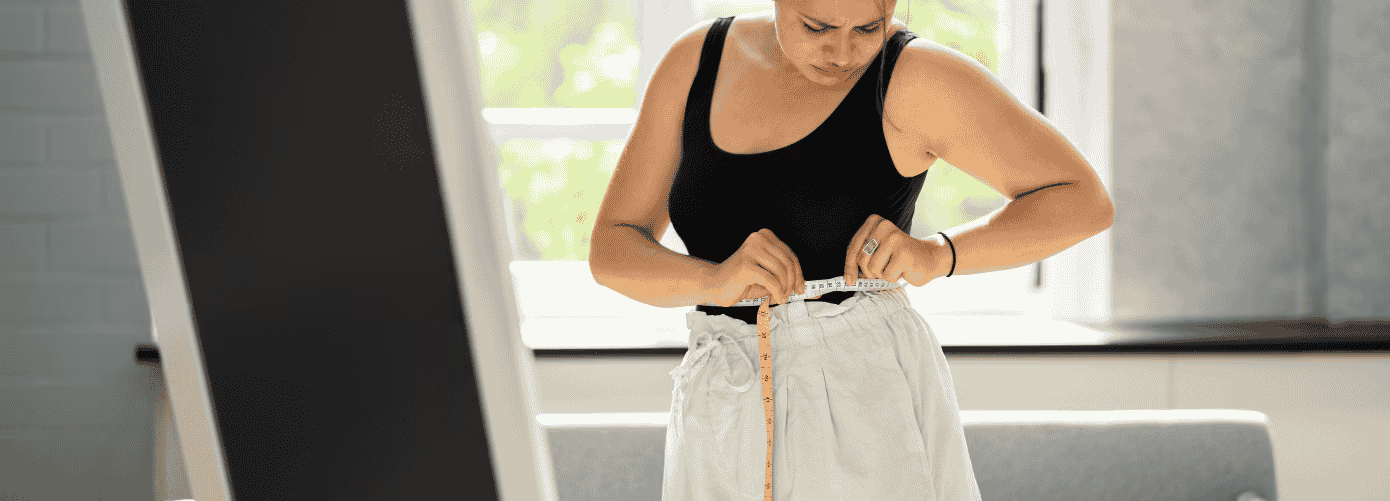
You’ve been eating right, saying no to junk, working out regularly, and even skipping that tempting dessert post-dinner. Initially, the results showed up, your clothes felt looser, the weighing scale kept dropping, and compliments rolled in.
It felt like you had finally cracked the code. But now? It’s been weeks. You’re still doing all the right things, but the scale refuses to budge. It’s stuck. And it’s frustrating beyond words. If this sounds like your story, you’ve likely hit what’s known as a weight loss plateau.
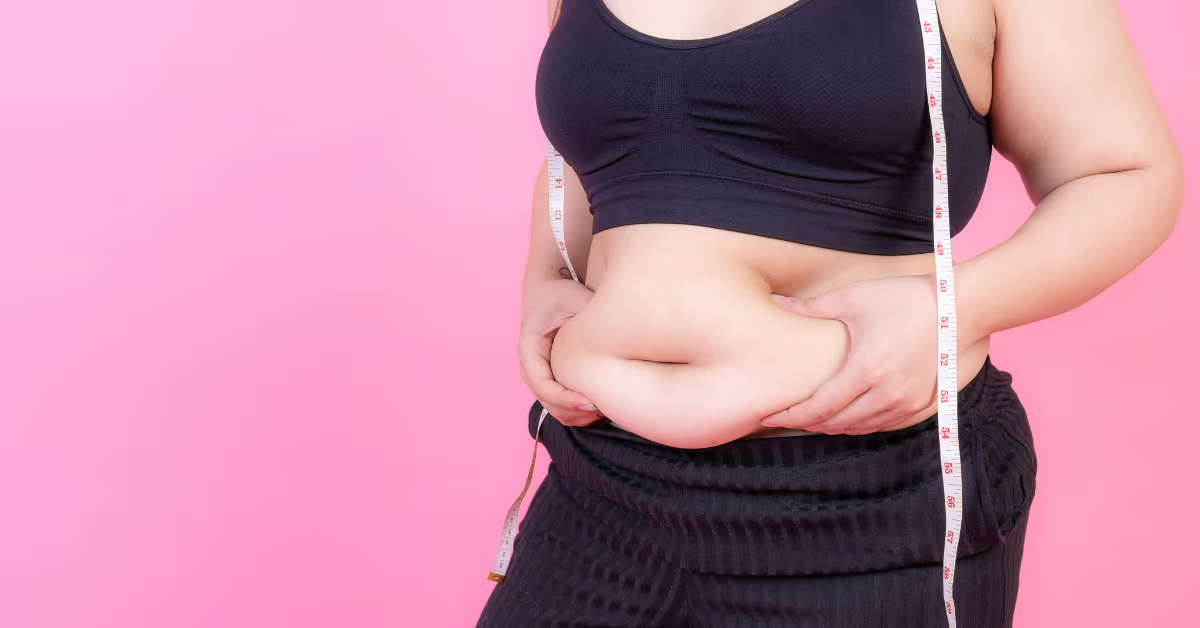
Weight Loss Plateau is a point where progress stalls despite consistent effort.
It’s one of the most common, yet misunderstood, phases in any weight loss journey. A plateau doesn’t mean you’ve failed. It just means your body has adapted. And yes, you can break through it. But to do that, you need to understand what’s really going on inside your body.
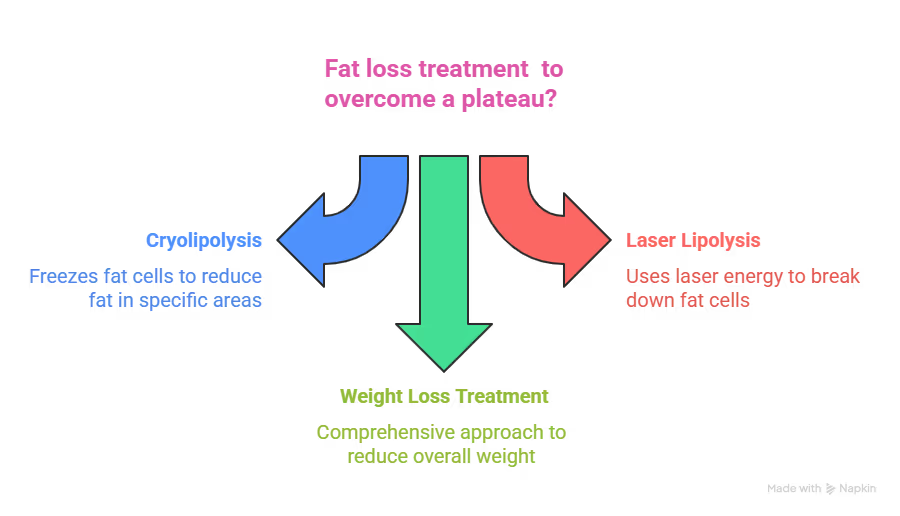
In this blog, instead of just talking about the usual tips, we’ll explore 3 proven fat loss treatments that can help break through the plateau by targeting those stubborn areas where diet and exercise alone often fall short. These treatments are non-surgical, safe, and designed to give your body the extra boost it needs to keep progressing.
Let’s start by truly understanding what a plateau is, because once you understand it, you can overcome it.
What Exactly Is a Weight Loss Plateau?
Let’s get something straight: a weight loss plateau is not just about the scale not moving for a few days. It’s a physiological adaptation, your body responding to the changes you’ve been making by slowing things down.
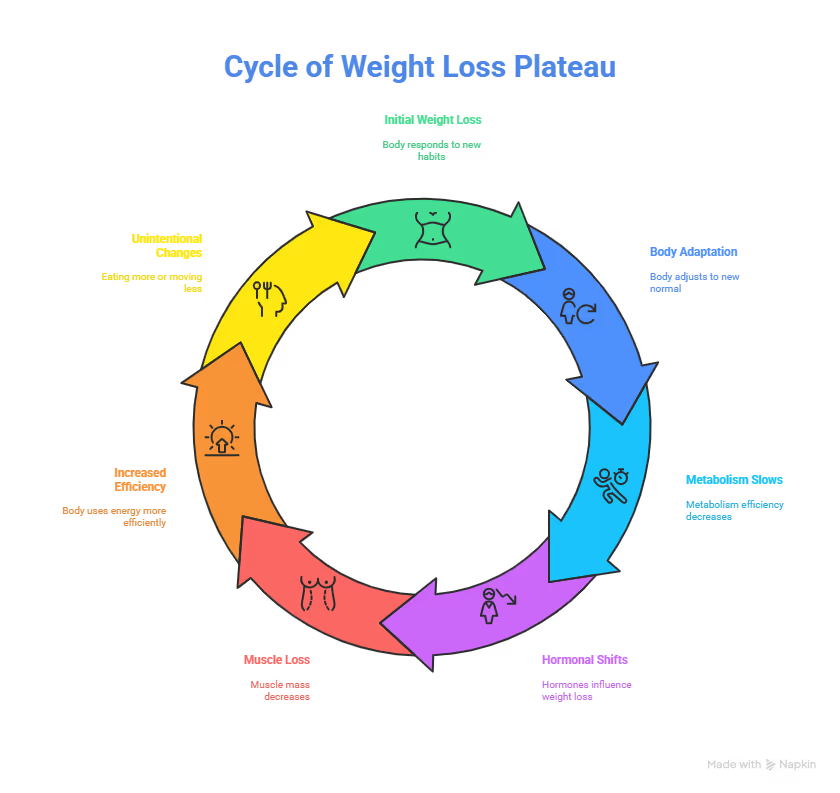
Think of it this way: at the beginning of your weight loss journey, your body is surprised. You’ve changed your eating patterns, started moving more, maybe cut down calories. Naturally, it responds by shedding some weight. But over time, as your body becomes used to this “new normal,” it gets smarter. It adapts.
Here’s what’s happening under the surface:
1. Your metabolism slows down
The most basic principle of weight loss is: burn more calories than you consume. But what most people don’t realise is that as you lose weight, your resting metabolic rate (RMR) also drops. That means your body burns fewer calories at rest than it did when you were heavier.
Why? Because your body now has less mass to carry, less tissue to maintain, and fewer demands overall. So if you were burning, say, 2,000 calories a day before, you might now be burning just 1,750 without making any other changes. That 250-calorie gap? It matters.
Weight loss impacts several hormones in your body, including ghrelin (the hunger hormone), leptin (which signals fullness), and cortisol (the stress hormone). When you’ve been in a calorie deficit for a long time, your body starts sending distress signals. It may increase ghrelin and reduce leptin, which means you feel hungrier and less satisfied with the same meals.
This is your body’s built-in survival mechanism. It doesn’t care about your beach body goals; it just wants to keep you alive.
3. Muscle loss can be a silent contributor
If your diet or workout plan wasn’t designed to preserve lean muscle mass (think: too much cardio, too little strength training, or not enough protein), chances are you’ve lost some muscle along with fat. And since muscle burns more calories than fat, losing muscle = slower metabolism.
That’s another reason your progress can slow down even if you’re still eating less than before.
4. Your body becomes more efficient
Here’s something few people talk about: as you repeat the same workouts, your body learns to do them more efficiently. That’s great for athletic performance, but not so great for calorie burn. So the same 30-minute jog that once had you dripping in sweat might now feel easier, and burn fewer calories, too.
This efficiency means you’re now burning less while doing the same routine, which can quietly stall your weight loss.
5. You’re unintentionally eating more or moving less
This one’s a bit uncomfortable to admit, but it’s real. When we hit a plateau, many of us start getting a bit casual with our routines. A few extra bites here, a missed workout there, an extra spoonful of rice... it all adds up.
How Many Weeks Is Considered a Weight Loss Plateau?
A valid question, how long do you wait before calling it a plateau? Here's how it typically breaks down:
1–2 weeks: Usually just normal day-to-day fluctuations. It’s not a plateau yet.
2–4 weeks: If your weight stays virtually the same for 2–4 weeks despite consistent effort, it’s likely a real plateau.
4+ weeks: A clear stall. This is definitely a plateau.
6+ weeks: A prolonged plateau, time to take more focused actions.
So, in direct answer to how many weeks is considered a weight loss plateau, most experts say 2–6 weeks of no progress is the threshold. Fewer than two weeks? Give it more time. More than six weeks? Time to really intervene.
But don’t just trust the scale. Also watch for:
Clothes fitting the same
Routine measurements (waist, hips) are not changing
The mirror looks pretty much the same
Energy and mood staying flat
These are signs your body is no longer responding, and it's officially plateau time.
3 Fat Loss Treatments That Work When You Hit a Plateau (Backed by Science & Real Results)
Hitting a plateau during your weight loss journey can feel frustrating. No matter how consistent things seem, your progress suddenly slows down, and certain areas like the lower belly, thighs, or arms just refuse to shrink.
This is where non-surgical fat loss treatments come into the picture.
These treatments are not about shortcuts or overnight results, they’re based on real science. They help your body break through stubborn fat zones that often don’t respond well to diet and exercise alone. And the best part? They’re non-invasive, safe, and require no downtime.
Let’s explore three powerful and popular treatments available today:
1. Cryolipolysis (Fat Freezing)
Also known as Fat Freezing or CoolSculpting, Cryolipolysis is one of the most effective non-invasive treatments for stubborn fat. And yes, it’s US FDA approved, so you know it’s not just a trend but a legit scientific breakthrough.
How it works:
Cryolipolysis targets fat cells by freezing them at a specific temperature. These frozen cells die and are naturally flushed out by your body over a few weeks. The best part? It only affects fat — not your skin or muscles.
Key Benefits:
Non-surgical & no downtime
Targets stubborn fat in belly, thighs, arms, and chin
Visible inch loss after 1 session
FDA-approved and 100% safe
Drop a full size in a matter of weeks
Zero needles, zero scars
Works great when you’ve hit a plateau and just need that final push.
2. Laser Lipolysis (Laser Lipo)
This is a slightly newer option, but equally effective, especially if you’re looking for fat reduction with a skin tightening bonus. It uses low-level laser energy to break down fat cells without harming the surrounding tissues.
How it works:
The laser energy gently penetrates the skin and targets the fat cells underneath. These cells shrink and break down, releasing their contents which are then removed through the body’s lymphatic system.
Key Benefits:
Reduces body fat, BMI, and overall inches
Improves skin tone and firmness
Non-surgical, completely safe
No recovery time required
Lifts saggy skin, especially helpful after weight loss
Repairs Striae Gravidarum (those early-stage red stretch marks)
Can be used for face as well, for lifting and firming
Unlike many other fat loss methods, Laser Lipo gives your skin a tighter, more youthful appearance, making it ideal if you’re looking for not just inch loss but overall shaping and skin improvement.
3. Weight Loss/Kg Treatment
When regular diet and workouts are no longer showing results, especially around stubborn areas, it may be time to consider a more focused and structured approach. That’s where Weight Loss/Kg Treatment steps in, a comprehensive, non-surgical therapy designed to promote overall weight reduction, improve body composition, and support your overall well-being.
This isn’t just about inch loss, this is about real, measurable weight reduction, targeted fat breakdown, and metabolic support. And the best part? It combines Manual Therapy techniques with advanced body contouring technologies, all without surgery or downtime.
How It Works:
This treatment typically includes a custom combination of:
Ultrasound Cavitation – to melt stubborn fat stored in deeper layers
Radiofrequency (RF) – to tighten skin and stimulate collagen
Vacuum & Lymphatic Drainage Massage – to boost circulation and eliminate toxins
Thermotherapy (heat-based) – to enhance metabolism and promote fat breakdown
Manual Therapy – specialised hand techniques used to stimulate fat mobilization and improve overall circulation
Each session usually lasts 45 to 60 minutes, and visible results start showing within 4 to 6 sessions, depending on body type and goals.
Whether your goal is to shed 2–5 kgs or simply move past a long-standing weight plateau, this therapy provides a safe, structured, and medically guided solution. It’s ideal for those who prefer a non-invasive approach that still delivers real, measurable results.
Confused About What’ll Work for You? VLCC Has the Answer.
There are so many fat loss and slimming treatments these days, fat freezing, laser lipo, weight loss therapies, it can get confusing to decide what’s best for your body. Honestly, every person is different, and what works for someone else might not work exactly the same for you.
That’s why VLCC is the perfect place to start. Our experts don’t just sell you a treatment; they listen to your concerns, understand your lifestyle, and help you choose the right option that fits you. Whether you want to lose some stubborn kilos, shape your tummy, or just feel more confident, they’ll guide you every step of the way.
Plus, all our treatments use safe, approved technology with no downtime, so you can get back to your routine easily. No rushing or stress, just simple, effective care that actually shows results.
So instead of stressing over what to pick, just walk into VLCC. Let the experts take over and help you get the body you want, in the easiest way possible.
Final Note
No matter how many diets you try or workouts you do, sometimes our bodies just need a little extra help. It’s completely normal to feel stuck or unsure about what’s next. The good news is, you don’t have to figure it all out on your own.
With expert guidance, personalised plans, and trusted treatments, VLCC makes your weight loss and body shaping journey easier and more effective. VLCC understands that everybody is different, and works with you to find the right approach that fits your lifestyle and goals, no pressure, no confusion.
So if you’re ready to finally see the change you’ve been waiting for, don’t wait anymore. Walk into VLCC today and let the experts help you take the first step toward a healthier, happier you.
Your journey to a confident new you starts here, book your consultation with VLCC now!