How to Stay Motivated to Lose Weight (Even When It Feels Hard) | VLCC
Weight Loss/Kg
How to Stay Motivated to Lose Weight (Even When It Feels Hard)
V
VLCC
Sep 2, 2025·24 min read
Ask anyone who has tried to lose weight, and the story usually sounds the same. At the beginning, energy is sky high. A new gym membership, fresh walking shoes, promises to eat healthy, maybe even a shiny new water bottle, everything feels exciting. The first few days or weeks go well, too. Then slowly, reality sets in. There’s a family wedding where gulab jamun looks too tempting, an office party where pizza slices win over salad, or just a lazy weekend when the morning walk is skipped. One day becomes two, two becomes a week, and suddenly the entire plan feels broken.
Most people lose hope here. It is not always a lack of knowledge. Everyone already knows that fried food adds calories or that walking helps burn fat. The real difficulty is not about “what to do,” but about “how to keep doing it every single day.” In simple words, motivation is the biggest challenge in weight loss.
A survey published by the National Center for Health Statistics found that almost 70% of people trying to lose weight said their biggest struggle was staying motivated long term (Source:NCHC.org). This shows the problem is not unique. Losing motivation happens to almost everyone.
So, the real question is: How to stay motivated to lose weight when the initial excitement fades? Let’s explore this step by step.
1. Why Motivation Matters More Than Diets or Workouts
Think of motivation as the steering wheel of a car. The engine (your body) may be strong, and the fuel (food and exercise) may be in place, but without the steering wheel, the car cannot move in the right direction.
Motivation is what keeps a person consistent. Diet plans can be downloaded from the internet, workouts can be found on YouTube, but without the drive to wake up and actually follow them, nothing changes.
It also plays a role in mental health. A person who feels motivated tends to stay positive, patient, and energetic. On the other hand, lack of motivation brings frustration, guilt, and eventually, quitting.
One interesting fact from EatingWell is that even losing 5% of body weight (say, 3–4 kg for many people) already reduces the risk of diabetes and improves energy (
). Now, imagine if such small results were celebrated instead of ignored. That alone can keep spirits high.
So, motivation is not just a “feel-good” factor. It’s actually the fuel that keeps progress alive.
2. Setting Realistic Goals: The First Step to Long-Term Motivation
One of the biggest killers of motivation is unrealistic expectations. Many people start with extreme targets like “10 kg in one month” or “no sweets for the next 6 months.” These sound impressive on paper, but rarely work in real life. When the body does not respond at the speed expected, disappointment kicks in.
Instead, the golden rule is: start small, stay steady.
In the Indian context, life is filled with occasions, birthdays, pujas, festivals, weddings, and office lunches. Expecting to avoid every single calorie-rich dish forever is unfair. A better approach is:
Aim for 1–2 kg per month instead of 10.
Swap fried snacks with roasted chana, but enjoy one samosa once in a while without guilt.
Walk 30 minutes daily rather than trying to run 10 km in the first week.
Each small, realistic goal achieved acts like a motivational boost. Losing just 1 kg is proof that the effort is working. Fitting into a kurta that felt tight last month feels rewarding. These small wins build a staircase of confidence.
As health experts in India often say, consistency beats speed. A person losing weight slowly but steadily is far more motivated than someone chasing extreme goals and failing.
3. Handling Temptations Without Losing Control
Now comes the toughest part, food temptations. In India, food is not just food; it is emotion. From parathas to Diwali sweets and Sunday biryani, food is linked to culture, tradition, and family bonding.
Saying “no” every time becomes mentally exhausting.
Here’s the trick: motivation doesn’t mean avoiding everything. It means learning balance.
Smaller portions: At a wedding, instead of three gulab jamuns, take one. Taste is enjoyed, but guilt is avoided.
Mindful eating: Slow down, chew properly, and enjoy the flavour. Half the time, overeating happens because food is eaten too fast.
Healthy swaps: Keep roasted makhana, peanuts, or fruit handy. When evening hunger strikes, reaching for them instead of fried pakoras keeps motivation intact.
Temptations will always be there. The key is not to fight them harshly but to outsmart them with small adjustments. Once balance is created, motivation doesn’t collapse after every festival or party.
4. Early Wins: The Secret Fuel for Motivation
Human minds love quick results. When effort brings visible change, motivation skyrockets. That’s why the first few weeks are the most critical in any weight-loss plan. If early wins are noticed, motivation becomes self-sustaining.
These early wins need not be dramatic. Simple changes like:
Feeling lighter after meals
Sleeping better because of evening walks
Dropping 1 kg in 15 days
Needing one belt hole tighter
These are powerful motivators. Many people quit because they ignore these small improvements and only wait for “big numbers” on the scale. But the truth is, small progress is still progress.
A smart idea is to note these changes in a diary or even click a mirror selfie every two weeks. Seeing the transformation, even if minor, is a huge boost to keep going.
5. Consistency Over Perfection
One of the main reasons people give up on weight loss is the idea of “all or nothing.” For example, if the diet is broken once, the thought comes: “Now everything is ruined, might as well eat whatever I want.” This mindset kills motivation faster than anything else.
One bad meal will never make someone fat, just like one healthy meal will never make someone slim. It is the overall pattern that matters. Motivation stays strong when perfection is not demanded.
A practical example: imagine someone walks 20 days in a month but misses 10 days. Many would feel guilty about the 10 missed days. But instead, looking at the 20 successful days is far more motivating. That’s 20 days of activity the body would not have received otherwise!
So, the golden rule is simple: stay consistent, not perfect. Weight loss is not a 30-day project; it is a lifelong lifestyle. Slip-ups will happen, but what matters is coming back on track the very next day.
6. The Power of Social Support
Motivation becomes stronger when it is shared. In the Indian context, food and lifestyle habits are family-driven. If the entire family enjoys pakoras in the evening, it becomes very difficult for one person to sit with a bowl of salad.
That is where social support plays a huge role. Research has shown that people who receive encouragement from peers lose more weight than those who try silently. One study found that members of online groups who received positive comments lost around 9 pounds more than others (arxiv.org).
In everyday life, social support can mean:
Asking a family member to join daily walks.
Requesting friends to avoid teasing when someone skips desserts.
Sharing progress with a close circle to stay accountable.
Even a simple compliment like “You look fresher these days” can motivate someone to continue. Support reduces the feeling of isolation and makes the journey enjoyable.
7. Rewards and Self-Celebration
Weight loss is a tough process. It requires discipline, control, and patience. If there is no celebration along the way, motivation dries up. That’s why rewarding oneself is important.
Rewards do not mean unhealthy food binges. Instead, rewards can be:
Buying a new kurta or saree after losing a few kilos.
Treating oneself to a spa or massage.
Watching a favourite movie guilt-free.
Planning a short weekend trip after a milestone.
In fact, a UK-based study showed that men who were given small incentives like motivational messages or cash rewards lost more weight compared to others (The Guardian).
In daily life, personal rewards work even better. Celebrating small wins keeps spirits high and reminds the mind that progress deserves happiness, not just sacrifice.
8. Exercise That Feels Fun, Not Punishment
For many, the word “exercise” feels like punishment, long treadmill runs, heavy weights, or boring gym routines. This is where motivation often dies. The secret is to choose activities that bring joy.
In India, there are plenty of fun options:
Dancing at home or joining a Zumba class.
Playing badminton or cricket with friends.
Cycling in the park.
Yoga or pranayama for calmness and flexibility.
Even daily chores like sweeping and gardening burn calories.
When fitness feels like play, there is no need to “push” for motivation. The body naturally craves movement. Many people who hate gyms have managed to lose weight simply by walking every evening with friends or family.
So, the trick is simple: find an activity that feels enjoyable. When the mind enjoys it, motivation stays without force.
9. Handling Plateaus Without Losing Heart
Every person trying to lose weight eventually faces a plateau, a phase where the body stops showing results even though the effort continues. This is the stage where many give up, thinking nothing is working.
But plateaus are natural. The body adapts to routines and holds on to energy more efficiently. Instead of quitting, a few tweaks can help:
Change exercise type: If only cardio is done, add strength training.
Adjust food portions slightly.
Focus on inches lost instead of just the weighing scale.
Drink more water and sleep better.
Motivation at this stage comes from reminding oneself that plateaus are temporary. Many people break through plateaus after a few weeks and then see progress again. Patience is key.
10. Long-Term Motivation: Turning Habits into Lifestyle
The strongest motivation is not about short-term excitement; it is about turning healthy actions into habits that no longer need daily pushing.
Some ways to build long-term motivation:
Revisit your ‘why’ regularly: Whether it’s to feel energetic, to fit into favourite clothes, or to avoid health problems, keep reminding yourself why this journey started.
Visual reminders: Keep a photo of your past self or your dream outfit as a reminder.
Routine building: Fix walking or workout timings. Once the routine is set, the body automatically adjusts.
Flexible approach: Don’t ban foods forever. Instead, balance them in smaller portions.
Keep evolving: Once one goal is reached, set another. Motivation grows when there’s always a next step.
Over time, what starts as “effort” slowly becomes “normal life.” And when healthy living becomes normal, motivation is no longer a daily struggle.
11. A Compassionate Mindset
One last but very important point: be kind to yourself. Many people destroy their motivation with harsh self-talk: “I have no control,” “I am a failure,” “I can never do this.” This negativity not only breaks the spirit but also increases emotional eating.
Instead, practice compassion:
Accept that slip-ups are part of the journey.
Replace guilt with patience.
Celebrate small improvements.
Motivation is stronger when the journey feels positive. The body responds better when the mind feels supported, not punished.
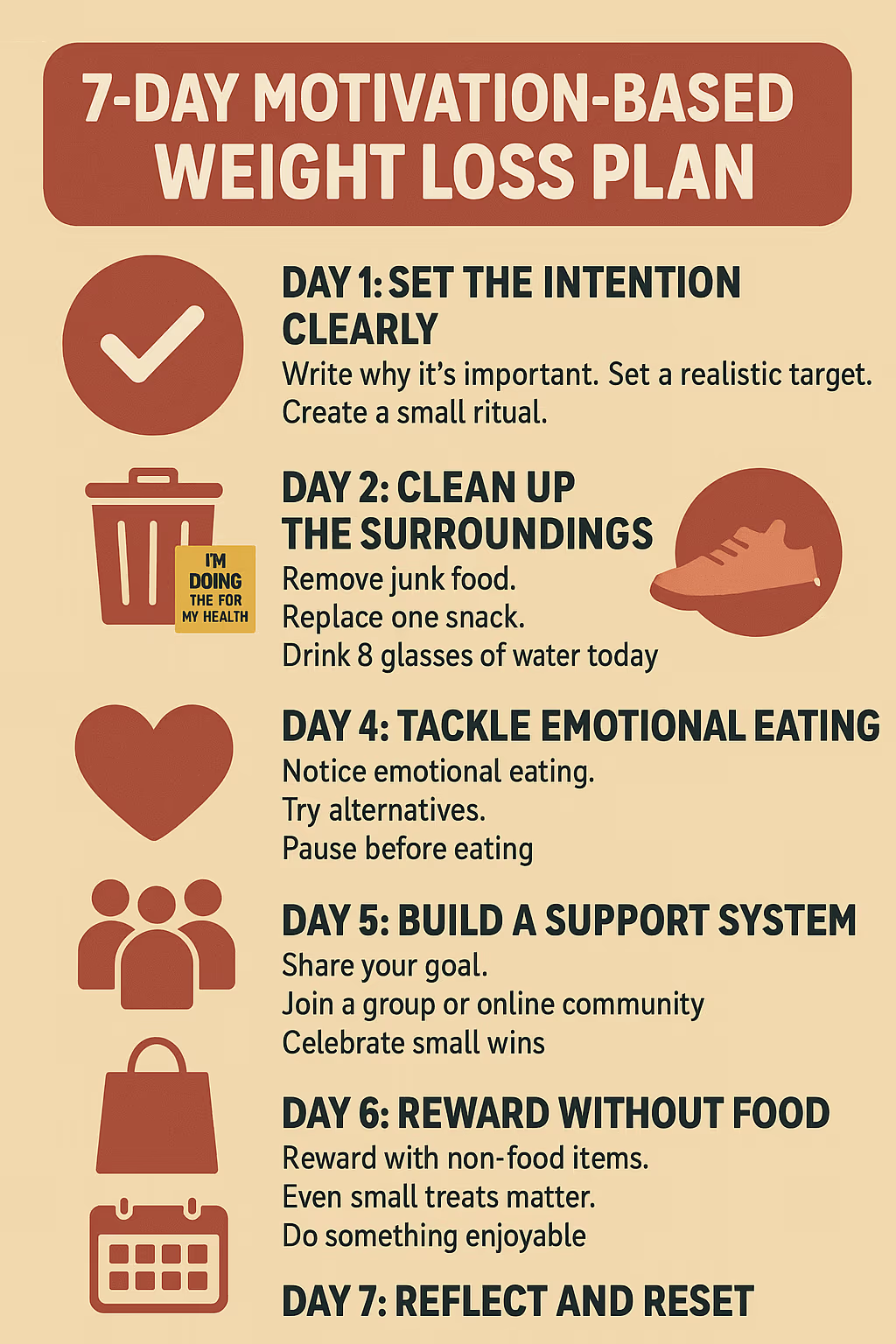
7-Day Motivation-Based Weight Loss Plan
This plan is not just about what to eat or how to exercise, but about training the mind along with the body. Each day has a focus theme that keeps motivation alive while building small, realistic habits.
Day 1: Set the Intention Clearly
Write down why weight loss is important. Maybe it’s about feeling lighter, wearing old favourite clothes, or having more energy.
Fix a realistic target. Instead of saying “I want to lose 10 kgs,” start with “I want to lose 1 kg this month.”
Create a small ritual – like putting a sticky note on the mirror that says “I’m doing this for my health.”
Drink 8 glasses of water today. Hydration alone helps reduce cravings.
Day 2: Clean Up the Surroundings
Motivation drops quickly when junk food is easily available. Remove chips, colas, and fried snacks from the house.
Keep fruits, roasted chana, makhana, or nuts within reach.
Rearranging the kitchen can psychologically prepare the mind for better choices.
Replace at least one unhealthy snack today with a healthy one.
Day 3: Move in Small Steps
Don’t wait for a “perfect gym plan.” Just begin with a 20-minute walk.
Play music, walk in the park, or do simple stretches at home.
The goal is to enjoy movement rather than punish the body.
Complete at least 5,000 steps today. Track them on a phone or watch.
Day 4: Tackle Emotional Eating
Many people eat out of stress, boredom, or late-night cravings. Notice when it happens.
Instead of reaching for food, try alternatives: listen to music, sip green tea, or call a friend.
Writing feelings in a notebook often reduces the urge to binge.
Pause for 5 minutes before eating anything outside of meals. Ask, “Am I really hungry?”
Day 5: Build a Support System
Share the goal with one friend or family member. Having accountability keeps motivation alive.
Join a fitness group or online community where others are also on the same journey.
Celebrating small wins together feels rewarding.
Share today’s healthy meal photo with a friend.
Day 6: Reward Without Food
Motivation increases when there’s a reward system. But avoid using chocolates or pizza as prizes.
Instead, reward progress with a new book, a spa day, or a new outfit.
Even marking a star on the calendar feels satisfying.
Do something today that feels like a personal reward (non-food).
Day 7: Reflect and Reset
Sit down and look back at the week. What worked? What didn’t?
Write down at least 3 positive changes noticed – maybe sleeping better, feeling lighter, or reduced junk cravings.
Reset the plan for the next week with small adjustments.
Make a weekly tracker chart to tick off goals daily.
This 7-day plan is not about drastic weight loss. It is about building motivation muscles so that consistency becomes natural. Once the mind is trained, food and exercise automatically follow.
Frequently Asked Questions
Before jumping into the most common doubts people have, it’s important to remember one thing: weight loss is not a one-day event; it’s a process. Motivation naturally goes up and down, and that’s completely normal. What really matters is how quickly one bounces back after a low phase. With that thought, here are some popular questions and their simple answers:
1. How do I stay motivated to lose weight when progress is slow?
Slow progress doesn’t mean no progress. The body takes time to adjust. Focus on small wins, like more energy, better sleep, or looser clothes, instead of just the scale. Remember, consistency always beats speed in weight loss.
2. Is it normal to lose motivation after a few weeks?
Yes, totally normal. Most people feel super energetic in the beginning but struggle later. That’s why making realistic goals and finding enjoyable workouts is so important. Even walking, dancing, or cycling can keep things fresh.
3. Can cheat meals ruin motivation?
Not really. Cheat meals actually help in the long run by keeping cravings under control. The key is balance: enjoy the treat, but don’t let it turn into a cheat week.
4. Do weight loss apps or journals actually help?
Yes, tracking progress makes motivation stronger. Writing down meals, workouts, and even moods helps in identifying what’s working and what’s not. Many people feel extra motivated when they look back and see how far they’ve come.
5. How do I handle demotivation from social media comparisons?
Avoid comparing personal progress with others online. Social media often shows filtered, curated results. Instead, compare progress with where things started; that’s the real win.
6. Should I join a weight loss group for motivation?
For many, yes. A support group, whether online or offline, provides encouragement, accountability, and even fun competition. Sharing the journey makes it easier to stay consistent.
7. Is it possible to lose weight without a strict diet?
Absolutely. Strict diets usually fail because they’re too hard to follow. A balanced approach with regular home-cooked meals, portion control, and occasional indulgence is more sustainable.
8. What if I keep falling off track again and again?
That happens to almost everyone. Instead of quitting, just restart the very next day. Every small restart builds discipline, and eventually, it becomes a lifestyle.
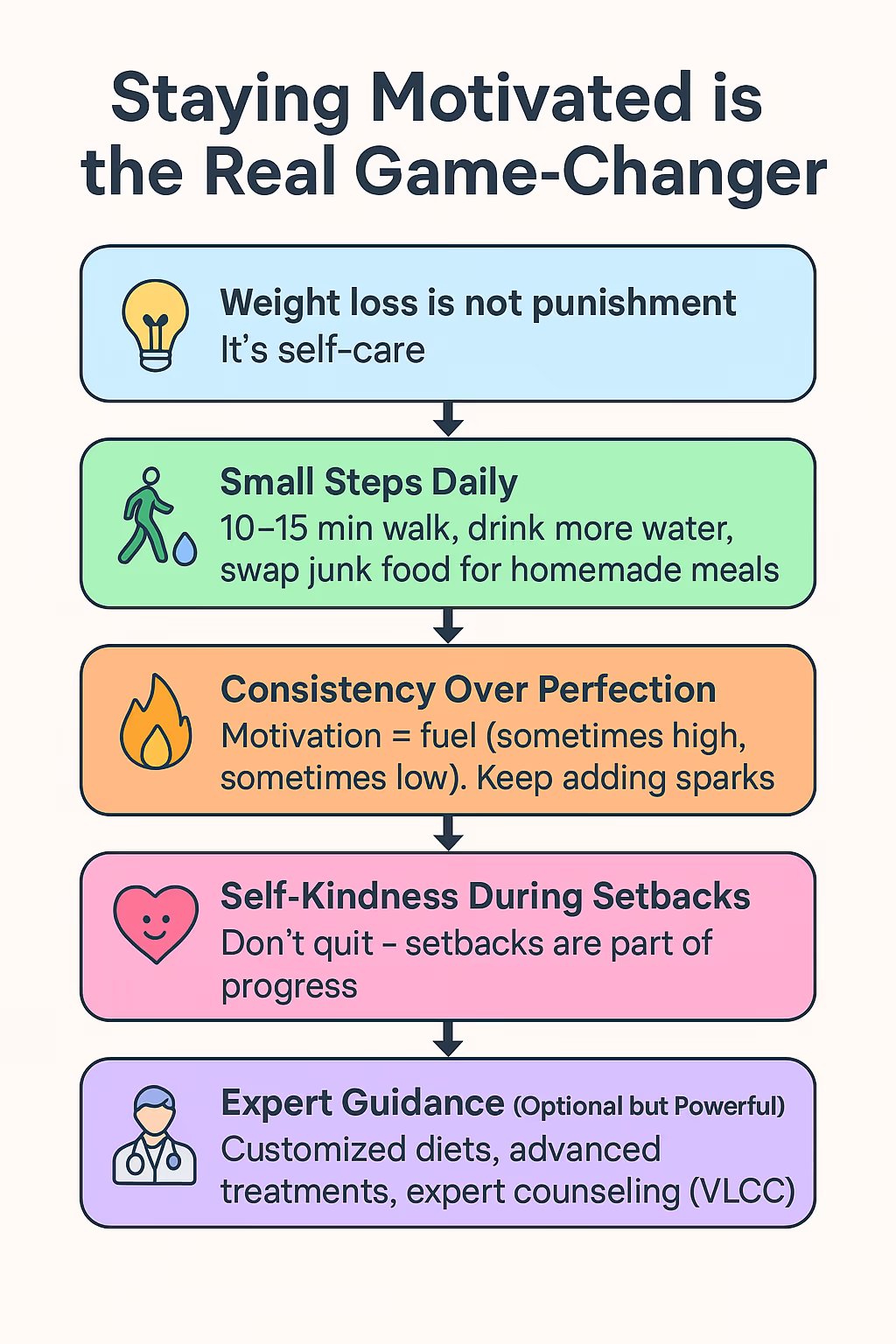
Staying Motivated is the Real Game-Changer
Losing weight has never been just about cutting calories or exercising harder. It is more about building the right mindset, staying consistent, and finding small joys in the journey. Every person who sets out to lose weight dreams of quick results, but the truth is, motivation works like fuel. Some days it burns high, some days it flickers. The key is to keep adding small sparks so it never dies out.
Real transformation happens when weight loss is not seen as punishment, but as self-care. It is about making healthier food choices because the body deserves good fuel. It is about moving more, not just to look good, but to feel light, energetic, and confident. And most importantly, it is about being kind to oneself during setbacks, instead of giving up.
Remember, even a 10–15 minute walk, swapping junk food for homemade meals, or drinking more water daily – these little things count. Over time, they add up to a lifestyle that is sustainable, not just a temporary fix.
But yes, sometimes guidance is needed to stay on track. Expert help can make the journey easier and more structured. This is where professional support like VLCC’s weight management programs can step in. With their customized diet plans, advanced treatments, and expert counseling, the process doesn’t feel like a struggle. Instead, it becomes a clear, guided path with visible results.
So, whether the goal is shedding a few kilos before a special occasion or building long-term healthy habits, the answer lies in consistency, patience, and the right support system. Stay motivated, believe in progress over perfection, and trust the process. The healthier, happier version is not far – it’s just waiting for a steady commitment.